Reverse Osmosis Filter
Clean & Clear 5 Series


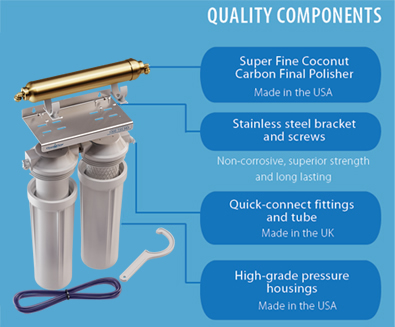
Our advanced Clean & Clear 5 Series purifies your drinking water in five stages using a reverse osmosis filter. This method removes suspended and dissolved solids such as chlorides, metals and chemicals to deliver clean, safe drinking water.
A reverse osmosis water filter effectively removes most common contaminants, including dust, rust, chlorine, heavy metals and microplastics. Many homes now use this reliable, cost-effective solution to ensure that clean drinking water is always available.
Many homes already use a 5 stage reverse osmosis water filter because it’s highly effective and compact. It fits neatly under the kitchen sink and features long-lasting, non-corrosive parts. With consistent maintenance, it can serve your home reliably for years.
The Five Stage Reverse Osmosis Filtration Process
Stage 1: The sediment pre-filter removes dust, rust and other large particles.
Stage 2: A granular activated carbon (GAC) filter removes chlorine, PFAS and PFOS.
Stage 3: The ultrafine TFC RO membrane filters out microparticles.
Stage 4: A prolonged contact time (PCT) filter captures fine grains.
Stage 5: A carbon polishing post-filter improves taste and odour.
Enquire below for a response within 1 hour
(business hrs)
We look forward to assisting.
Customers that love us
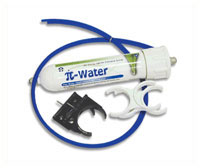
Pi Water Filter
Pi Water was developed through extensive plant research in Japan in the early 1960s. By using a special filtration system, a bio-water was created with special life- and health-giving properties that helped plants thrive well beyond normal expectations.
Features
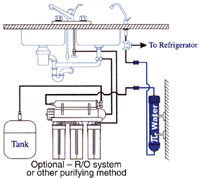
The research of Drs Yamashita and Makino also found that when trace amounts of ferric/ferrous (iron) salt were energised in the water, the energy of the water increased dramatically. Pi Water’s life-giving energy has been shown to stimulate the self-healing properties of the cells of plants and animals alike. After over 30 years of research and hundreds of patents, this process has created what is now referred to as Pi Water, or Living Water. It is simple to install on any existing purifying systems.
The Process
Step 1: YMS Pi Ceramic – Makes the water cluster smaller and gives it energy.
Step 2: Coral Sand – Adds minerals to the water and stabilises the PH.
Step 3: IMS Pi Ceramic Balls – Adds minerals and calcium ions to the water.
Step 4: Magnet – Treats with a strong magnetic field to energise the water.
Step 5: BCS Bio-Pi Ceramic Balls – Reduces the water cluster size, removes harmful ions and energises the water.
Specifications
Dimensions (mm): 305 L x 75 D
Water Flow/m: 1.5 GPM
Water Pressure: 10 ~ 125psi
Water Temperature: 40 ~ 110°F
Ageing: 24 Months
Is a Reverse Osmosis System Worth It?
Is a reverse osmosis system worth it? In this comprehensive article we’ll explore the benefits, costs, return on investment (ROI), possible drawbacks and other things. We’ll also discuss which specific features to look for before you commit to reverse osmosis for your home. In addition, we’ll compare reverse osmosis (RO) with other water purification systems. Let’s start.
Reverse osmosis benefits
A properly designed and installed RO system can effectively remove mercury, lead and other heavy metals. It can even remove other microparticles because of the system’s ultrafine filters (e.g. 0.005 microns). As a result, almost only the pure water is able to pass through the filter.
Many Sydney homeowners and families understand the risks presented by heavy metals and microparticles. These substances can interfere with the normal bodily functions especially the nervous system. Worse, the children are more susceptible to these risks because they’re still in their critical stage of development. For instance, lead contamination and accumulation in the body can lead to irreversible and permanent health effects. For young children, they can absorb up to 5x of lead compared to adults (which makes kids more vulnerable). Lead may be present in our water supplies because of pollution and industrial activities. It should be removed and one of your best options is by having a reverse osmosis system in your home.
Our local water supply and treatment facilities might not be removing most of the lead. In addition, there are risks in the pipelines. We’re still not certain what specifically happens when water travels through kilometres of pipes before it reaches our tap. The water might become contaminated with heavy metals and microparticles along the way.
How RO removes microparticles
It’s possible because of the ultrafine filters. The term “reverse” in reverse osmosis is due to its counter action to what nature has intended. Naturally, water travels from low solute (e.g. microparticles) to high solute concentration. This is to dilute the solution and somehow attain a balance.
In contrast, RO reverses the whole process. The result is more amounts of pure water at the other end. This is possible because of the pressure being applied. The water is forced through the filter membrane. It’s still similar to normal filtration. The difference is the pressure required to make the process possible.
How much does a reverse osmosis system cost?
When considering costs, you should think about both the upfront and the long term. You should consider the cost of the unit, parts, installation and labour. For the long term, you should pay attention to the warranty and durability of the unit.
The longer the warranty period, the more confidence the manufacturer shows about the product. This could mean that the unit was properly and thoroughly tested. It also gives peace of mind to consumers. They would not worry much if the unit fails early on. The long and comprehensive warranty takes away the risk. Thankfully, many RO units have a warranty coverage of up to 5 years (you should enquire about the coverage to be sure).

In addition, you might also get a free installation service. The company might install the unit, housings and fittings at no extra costs to you. You might also even get a new complimentary tap when you buy the water filtration unit from them.
The inclusions might vary from company to company. If you’re searching for a fair deal, you can still find one without sacrificing quality. You can still find reasonable pricing while ensuring the integrity of the RO unit.
Preferably, you should choose Australian-made units and parts for your water filter. To help you feel certain about this, the housings, tubings, valves and other parts should have moulded proofs of the manufacturer marks (not stickers). This gives more evidence that the parts are actually manufactured by a reputable company.
Moreover, whether free installation or not, the company you choose to install the unit should also be reputable and qualified. The unit is only as good as the installation. If the installation was done properly, the unit will also work properly
Return on investment (ROI)
If the unit is worth it, it should yield a positive return on investment. This could be ROI on costs, savings and health. Let’s first talk about health. Clean drinking water will have a positive cumulative health effect. Instead of accumulating toxins, your organs will experience less strain in processing them. In the long term, you will become healthier. This is especially important for children. The effect of toxins gets magnified to them because of their small, young and growing bodies. There’s even a compounding effect because everyone drinks water each day. Imagine the effect through the years. In the long term, there will be a positive ROI because you get healthy and you minimise your family’s exposure to heavy metals and harmful microparticles. This could result to savings in hospital bills (fewer visits to the doctor). What about the direct savings? Under the sink RO units will cost you a few additional hundreds of dollars. But it’s almost nothing compared to the health benefits you get and the diseases you would have prevented. You even get a better ROI with units that have a comprehensive warranty. You won’t worry much about the parts replacement and labour costs in the near future.
Also, you actually save money if you have your own RO unit at home. You’ll always have clean drinking water 24/7 without buying bottled water every now and then. Each litre of bottled water costs 2-3 dollars. On the other hand, water coming from the RO unit cost only cents.

In addition, we should also consider the environmental impact of bottled water and plastic bottles. Actually, water is also used to produce plastic bottles. This means supporting bottled water actually wastes a lot of water. Furthermore, the resulting plastic waste ends up in our landfills, rivers and oceans. This becomes a serious concern especially that the sales of bottled water increases year after year.
You can help the environment (and save money) by having your RO or water filtration unit in your home. You’ll have access to clean drinking water without purchasing bottled water every now and then. The benefits go both to you and the environment.
Comparison to distillation, UV treatment and other methods
The possible drawbacks mentioned above made other families consider other water purification options such as distillation, UV treatment, ozonation or just plain disinfection (e.g. chlorination).
However, those methods also present other drawbacks themselves. Distillation uses a lot of electricity or fuel to produce clean water. The process needs a lot of heat and then you need to cool the resulting water. In addition, distillation also removes almost all minerals. On the other hand, UV treatment and ozonation only kills microorganisms and not remove microparticles. It’s also similar with chlorination wherein bacteria and other microbes get killed but there will be disinfection by-products such as trihalomethanes.
There are always possible drawbacks and tradeoffs with each water purification method. One reason reverse osmosis is the clear choice is that it’s effective in removing both the microparticles and bacteria. In addition, it’s more cost-effective than distillation and other methods. Distillation and UV treatment are prone to equipment failure and have other disadvantages. Distillers are also vulnerable to scaling just like hot water units. UV water disinfection doesn’t offer residual treatment (in contrast to chlorine which offers continuous protection). The surviving bacteria might proliferate after the UV treatment.
Is a reverse osmosis system worth it?
In summary, water filtration (especially reverse osmosis) is the preferred choice because of its effectiveness and relatively lower costs. It’s highly effective in filtering out both chemicals and microorganisms. It’s also cost-effective (only hundreds of dollars) and can last for many years with minimal parts replacement and maintenance.
Here at Clean and Clear Purification Specialists, our experienced technicians have been installing RO units in Sydney homes for many years. We also offer a comprehensive warranty for all our water filtration units.
If you’ve finally decided that reverse osmosis is the ideal one, you can contact us online and we’ll respond as soon as we can about your enquiries.

Why Choose a Reverse Osmosis Filter in Australia?
A reverse osmosis filter in Australia provides clean water that’s safe for the whole family. It’s an ideal choice for homes concerned about lead, chemical residues and contaminants from old pipes. Many customers also trust our water filter system in Melbourne to deliver clean, reliable water across homes and apartments of all sizes.
Benefits of the 5 Stage Reverse Osmosis System
A 5 stage reverse osmosis system removes harmful particles and metals, making water safer for young children and people with sensitive health needs. The ultrafine filtration system captures particles as small as 0.005 microns, letting only pure water through. This level of reverse osmosis filtration supports better health and hydration over time.
Reverse Osmosis Water Filtration vs Other Methods
Compared to distillation or UV treatment, reverse osmosis water filtration removes chemicals and bacteria. Other methods may only kill microorganisms or require high energy use. The 5 stage water filter system offers better long-term value with minimal maintenance.
What Does a 5 Stage Reverse Osmosis Filter Cost?
Upfront costs for a 5 stage reverse osmosis water filter include the unit, installation and parts. Over time, the return on investment becomes clear. It reduces the need for bottled water, cuts down on plastic waste, and protects your family’s health. If you're in NSW, we also offer reliable water filter systems in Sydney with full installation and warranty support.
Long-Term Savings with a Reverse Osmosis Water Filter
Using a reverse osmosis water filter reduces your reliance on bottled water and saves money long term. Each litre from your system costs just cents compared to dollars for bottled water. The system also helps reduce environmental waste and water use from plastic production.
Choosing a Reverse Osmosis System in Australia
When choosing a reverse osmosis system in Australia, look for durable materials, strong warranty coverage and qualified installation. Australian-made units with genuine stamped components give peace of mind and ensure long-lasting performance.
Ready to Install a Reverse Osmosis Filter?
At Clean & Clear, we install reverse osmosis filters across Sydney and Melbourne. Our team provides expert service, Australian-made units, and comprehensive warranties. Contact us today to learn more about installing a 5 stage reverse osmosis system in your home.
FAQs About Reverse Osmosis Filters
What is a RO water filter, and how does it work?
A RO water filter uses high pressure and a membrane to remove contaminants from water, leaving it clean and safe to drink.
How often should I replace my RO filter?
Depending on usage and water quality, you should replace your RO filter every 6 to 12 months. The RO membrane typically lasts up to two years and should also be replaced often to keep your reverse osmosis drinking water clean.
Is a reverse osmosis system in Australia worth it?
Yes. It offers a safe, efficient way to improve water quality at home while reducing your need for bottled water and maintenance.
What is the difference between a 5 stage water filter and a standard filter?
A 5 stage system provides multiple layers of filtration, including a fine RO water filter membrane, which removes more particles and improves taste.